
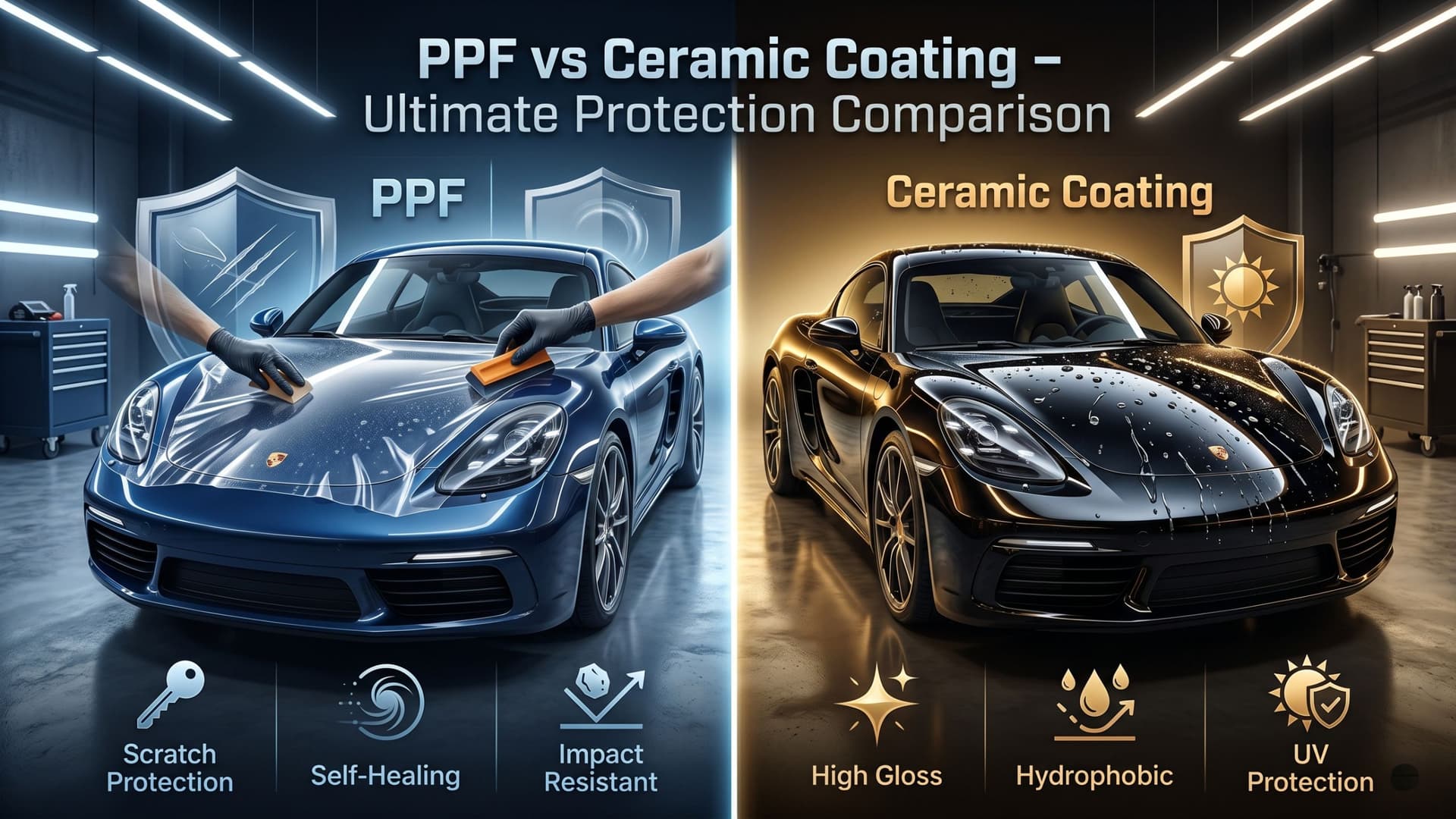
 Buying Guide
Ceramic Coating vs PPF: Which Is Right for Your Car in Pune?
Both protect your paint — but they do it in completely different ways. Here's the honest comparison every Pune car owner needs before spending a rupee.
Read Article
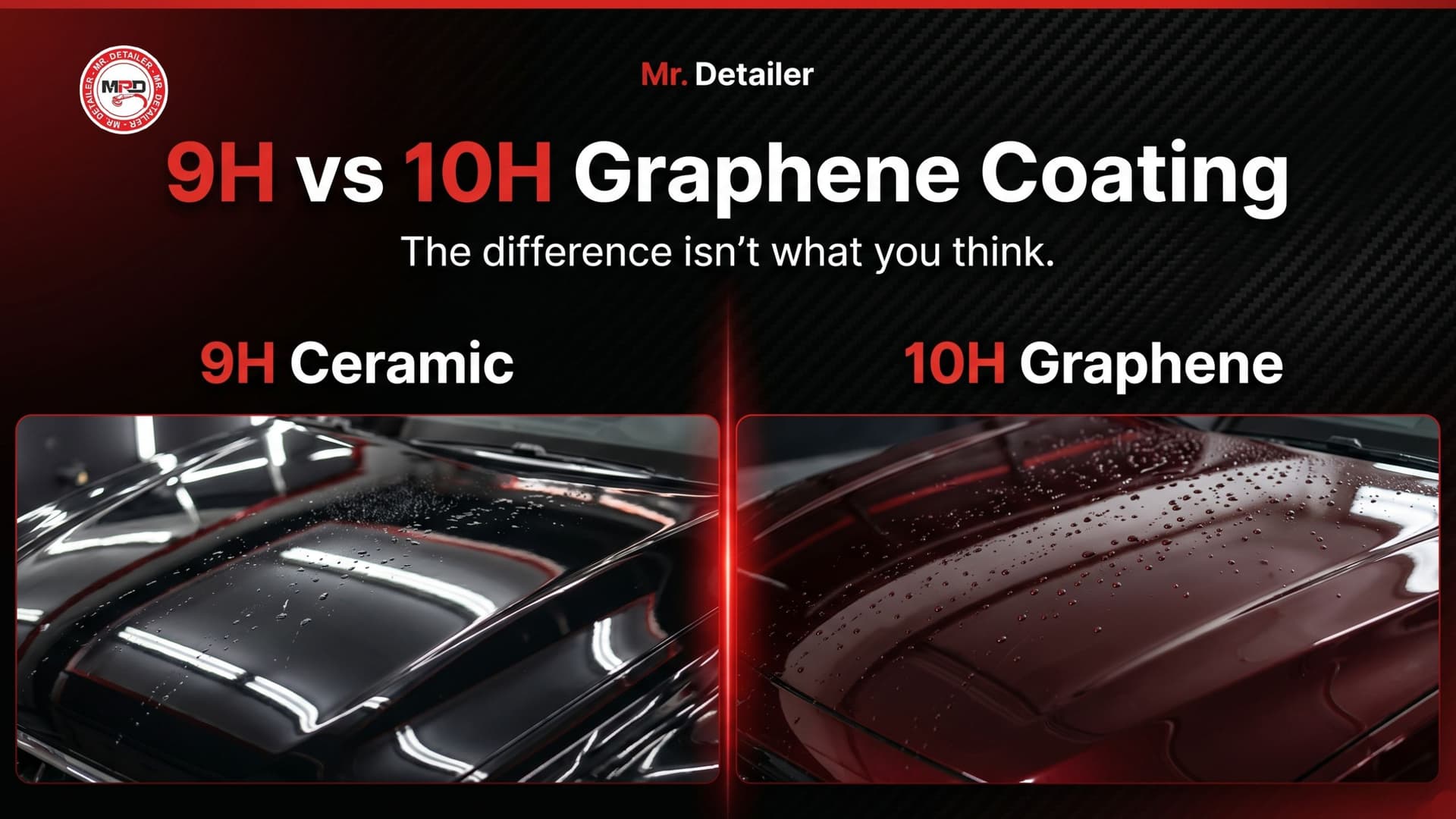
The H ratings on ceramic coatings confuse almost everyone. Here's what they actually mean and which grade makes sense for your car, usage, and budget.
When you start researching ceramic coating, you'll quickly notice grades like '9H', '10H', and 'Graphene' being thrown around. Most studios use these terms as marketing shorthand — but what do they actually mean in practice? And more importantly, which one is worth paying for? This is your straight-talking guide.
The 'H' rating refers to the pencil hardness scale — the same scale used to rate the hardness of pencil leads. The scale runs from 1B (softest) to 9H (hardest pencil). When a ceramic coating is rated 9H, it means the cured coating resists scratching from a 9H pencil — the hardest standard on the scale. This does NOT mean the coating is 9 times harder than glass, or that it's bulletproof. It means it resists scratches from a specific lab test tool. In real-world terms, a 9H coating will resist fine swirl marks from dust and light abrasion — but a sharp key drag will still scratch it.
9H professional ceramic coating is the most widely used grade in quality detailing studios across India. It offers an excellent balance of hardness, gloss enhancement, UV protection, and hydrophobic performance at a price that works for most car owners. A professionally applied 9H coating from a certified studio typically lasts 2 to 3 years.
Technically, the standard pencil hardness scale only goes to 9H — so '10H' is a manufacturer's marketing claim that suggests their formula exceeds the 9H pencil test. In practice, 10H coatings typically use a higher concentration of SiO2 (silicon dioxide) or add titanium dioxide compounds to achieve greater hardness and heat resistance. The real-world difference over 9H is incremental — not dramatic.
Graphene coating is a genuine technological leap. Graphene — a single layer of carbon atoms arranged in a hexagonal lattice — is 200 times stronger than steel and an exceptional thermal conductor. When graphene is incorporated into ceramic coating formulas, it addresses the two biggest weaknesses of traditional ceramic: water spotting under hard water conditions and heat-induced degradation. In Pune's hard-water tap conditions and extreme summer heat, graphene outperforms standard ceramic coating significantly.
| Feature | 9H | 10H | Graphene |
|---|---|---|---|
| Scratch Resistance | High | Very High | Very High + Flexible |
| Water Contact Angle | 100–110° | 110–115° | 115–120° |
| Heat Resistance | Good | Very Good | Excellent |
| Anti-static / Dust Repel | No | No | Yes |
| Anti-Water Spotting | Moderate | Good | Excellent |
| Typical Lifespan | 2–3 years | 3–4 years | 4–6 years |
| Starting Price (Pune) | ₹8,000 | ₹12,000 | ₹18,000 |
| Best For | Budget-conscious, city cars | Daily drivers wanting longevity | Premium / luxury / highway cars |
At Mr. Detailer in Katraj, Pune, we stock all three grades and will honestly recommend the right one for your car after a free inspection — not the most expensive one. WhatsApp 9665732230 to book.
Free inspection and honest advice at Mr. Detailer — Katraj, Pune.
Buying GuideBoth protect your paint — but they do it in completely different ways. Here's the honest comparison every Pune car owner needs before spending a rupee.
Read Article Knowledge
The honest, no-marketing answer to the most-asked question at our studio. Lifespan depends on 4 key factors — here's exactly what to expect.
Read Article Bikes
BikesRoyal Enfield, KTM, Pulsar, R15 — ceramic coating for bikes is the smartest upgrade you can make. Here's everything: what it costs, what it does, and what to expect.
Read Article